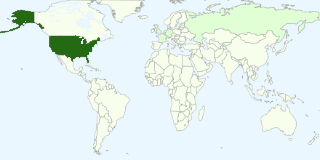
I'm also glad to announce that throughout the one month that the blog has been in operation, it has attracted a global audience! The blog has had hits from the United States, United Kingdom, France, Germany, Serbia, Russia and the Netherlands totaling 849 page views! Check out the map and breakdown of views below! Thanks to everyone for your interest and continued support!
United States: 773 United Kingdom: 118 France: 16 Germany: 7 Serbia: 5 Russia: 3
Netherlands: 1
I'm very excited to share with you many more stories, issues, recipes and ideas about local and sustainable eating in the next month! I have some great ideas up my sleeve so keep an eye out for stories about JMU's sustainable efforts, Project Grows Crop Mob, Light Night, the Science of Shopping, Friendly City Food Co-op and many more! And if you have any ideas, issues or recipes you'd like to share with me feel free to email me at ryanslocalroots@gmail.com or post a comment below any post! I'd love to make the blog more interactive and that can be done with your help! Feel free to comment and start a conversation! Also, if you haven't done so already please like Ryan's Local Roots on Facebook and follow the blog on Twitter!
As always thanks for the continued support and readership!
~Ryan
"We are indeed much more than what we eat, but what we eat can nevertheless help us to be much more than what we are." - Adelle Davis
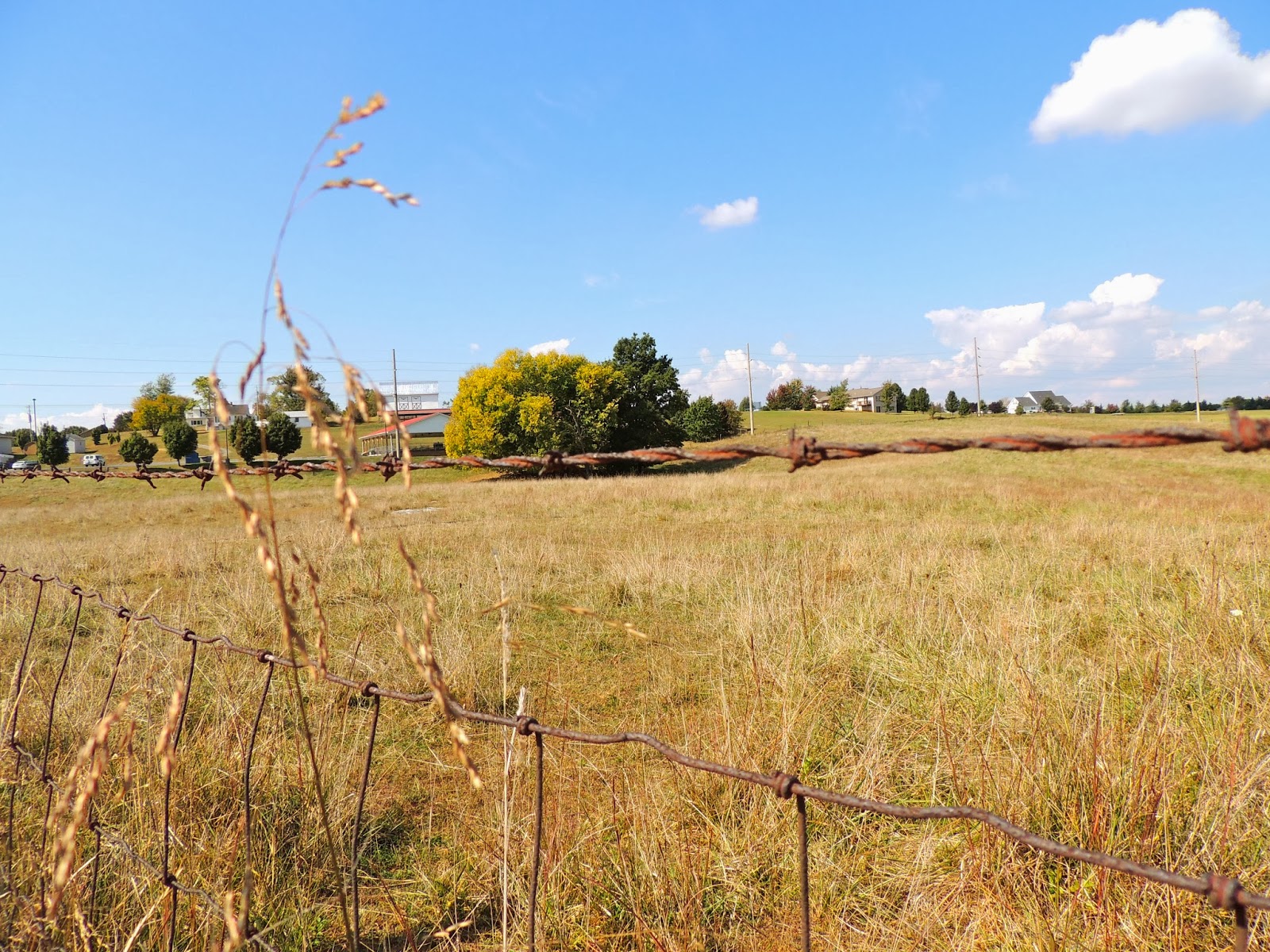
A few days ago I decided to enjoy the weather and shoot some photos for my blog post about Autumn in Harrisonburg. It was a beautiful day and I was able to get some really great shots of the leaves beginning to change and some scenery right outside my apartment. As I was walking and enjoying my surroundings I came across a Martin's grocery bag tangled up in prickly stems, blowing in the wind. Not only did it distract me from what I was doing, the print on the bag caught my attention. "Please Recycle Me". To be honest I laughed at the irony of this scene. It was so great I decided to photograph it as a sort of public service announcement. My picture is below:
So I began to think... what is the importance of recycling? What is our role in recycling? How does it affect our local environment?
The Importance of Recycling:
Recycling just makes sense, why spend money, time and resources on something that we have already produced? In 2009 Americans produced 4.3 pounds of trash per person per day. (Source) According to this statistic the 2 parent - 2 child household would produce 6,278 pounds of trash per year. That is more than the weight of a fully grown adult giraffe. Or the collective weight of 32 adult American males. According to the 2012 consensus, the average American lives 78.64 years. So the average American will produce 123,425.48 pounds of trash in their lifetime. How many people live in the U.S.? 313,900,000. The current population of the U.S. will produce 38,743,258,172,000 pounds of trash in its lifetime. If you are as confused at how to read that number as I was, it is 38 trillion 743 billion 258 million and 172 thousand pounds of trash from the U.S. alone. To put that into perspective, that is more than double the number in dollars that is the U.S. National Debt. Unfortunately the U.S. makes up only 4.45% of the world's population. So imagine the amount of trash the current population of the world produces in its lifetime. The number is simply incomprehensible. That is the importance of reducing, reusing and recycling.
Our role in recycling:
Reducing:
Do you ever look at the packaging of products? Let's think about it for a moment. We are shopping in the grocery store and we are in the cookie isle. It just so happens to be the best time of the year and there are girl scout cookies on the shelves! My favorites are the Peanut Butter Patties and the Samoas so I toss a box of each in my cart. Next stop is the water isle so I grab a 24 case of water bottles. Then I head to the milk isle and pick up a gallon of 2% milk, what's better than milk and cookies? As I'm in the dairy isle I remember I need eggs so I grab a dozen and put them in my cart. Oh, I also need raisins for a snack so I grab a bag of those and some string cheese would be great as a snack too! I'm all finished shopping so I head to the cashier and I am convinced by the impulse buying shelves near the register and I buy a pack of gum. The cashier bags up my groceries and I leave with 3 plastic bags, oh wait 4 plastic bags because the milk is double bagged. And I head home in the car.
Now picture this: We bike to the Farmer's Market today and we remember our reusable bags! (Which we got for free at a promotional event on campus. Or from Target as they gave away 1.5 million reusable bags in 2013 to get guests excited about sustainable living. Or we purchased a few from our favorite grocery store for 99 cents each.) And as we shop the farmer's market we come to a realization that practically nothing is packaged. Fruits and vegetables are out on display free of packaging, the eggs are in cartons that are recycled from customers or we bring our own carton and the milk is in a glass container which we bring back each week to be refilled. The cheese we purchase is packaged but not nearly as much as the string cheese from the grocery store which is in a plastic bag and each piece of cheese is individually wrapped in plastic. We grab some raisins from the lady who sells nuts and dried fruits in bulk. We use a small plastic bag here but it is nothing compared to the packaging for raisins at the grocery store. In order to get to the raisins we must open the plastic bag and then open the dozen small cardboard boxes. And instead of purchasing water bottles we carry our own reusable water bottle which can be refilled as many times as we like!
Notice how I purposively used "I" in the first scenario and "We" in the second. That is because purchasing foods with excess packaging in the grocery store is thinking about convenience instead of impact. "I" holds the individual accountable while "We" indicates a group effort. In this situation,"We" is positive and "I" is negative. Reducing should be a positive experience and it should be experienced with others! Take friends to Farmer's Markets and enjoy the outdoors, tunes of local musicians and the conversations with local farmers!
Reusing:
Buy used! Almost everything we purchase can be purchased used, except for food of course. Clothing can be purchased at thrift stores and Goodwills. This also reduces the use of plastic to wrap new clothing, cardboard boxes which new clothing is shipped in and the transportation of these boxes of clothes which reduces carbon dioxide and pollution! And much of the clothes from thrift stores are donated locally and in good condition. If you shop at a locally owned thrift store you are also helping your town's small business owners!
Bring your own silverware and tupperware to work and school instead of disposable brown bags and plastics.
Be aware of items that can be reused such as glass packaging! Pickle jars, salsa containers and Mason jars can all be reused as drinking glasses. This is also becoming a popular trend because of the vintage/hipster lifestyle and it is a fun conversational item. Imagine having friends over and enjoying a beer or glass of wine in a recycled pickle jar or salsa container. You would spread recycling awareness to friends and family while having a good time! Recycling:
Recycling goes beyond plastic bottles, plastic bags, newspapers and white paper, recycling is a mindset. If you change your mindset you will be able to recycle almost anything and help people along the way! Did you know: your christmas tree can be recycled and turned into mulch, your car can be recycled and you will receive a tax deduction and your computer can be donated to your local library to promote education for those who cannot afford a computer? Cell phones, tires, ink cartridges, magazines, paint, books, batteries and hangars can all be recycled in some way. Check out the full list here!
Lastly, Recycling's affect on our local environment: "Decomposing garbage generates methane, which is about twenty times more effective than carbon dioxide at trapping heat in the Earth’s atmosphere, according to the Environmental Protection Agency" (source). This methane is directly affecting our local environment and health because landfills are much closer to our homes than we think. My landfill is located at 2400 Grassy Creek Rd, Harrisonburg, VA, only 8.5 miles or 16 minutes from my house. The environmental impacts are right down the road.
On a more positive note recycling employs 10 times more people than traditional waste disposal firms do. So by recycling we are also stimulating our local economy by providing jobs to community members!
Jack Johnson couldn't have said it better! Check out his video!
Reduce. Reuse. Recycle.
~Ryan
"The garden suggests there might be a place where we can meet nature halfway" Michael Pollan
Are you finding yourself staring at all the apples you picked and wondering what to do with them? Apple pie is the go-to solution for an excess of apples but let's try to escape the norm and explore some neat ways to use your extra apples! How does an Apple Ham Cheddar Melt sound? Considering all the wet weather we've been experiencing here in the Shenandoah Valley that sounds like a great comfort food! Below is the recipe:
1 medium local apple, cored and cut into 1/4-inch-thick rings
2 tablespoons unsalted butter, softened
DIRECTIONS
STEP 1
Preheat oven to 375 degrees. Spread half the bread slices with mustard. Layer with cheddar, ham, apple, and more cheddar, dividing evenly. Top with remaining bread slices. Lightly butter both sides of sandwiches.
STEP 2
Heat a large nonstick skillet over medium heat. Working in batches, cook sandwiches, turning once, until bread is golden, about 4 minutes per side. Transfer sandwiches to a rimmed baking sheet. Bake in oven until cheddar is melted, about 5 minutes. Cut each sandwich in half on the diagonal, and serve warm.
Maybe you are just looking for something healthy to snack on rather than a bag of salty chips or pretzels. Plus we are all aware of the preservatives, high sodium content and high fat content in chips and salty snacks. Why not try out making your own so you can control the ingredients. Below is the recipe for Cinnamon Apple Chips, a delicious and healthy alternative to salty snacks!
2 cups unsweetened apple juice 1 cinnamon stick 2 Red Delicious apples
Method:
1) In large skillet or pot, combine apple juice and cinnamon stick; bring to a low boil while preparing apples.
2) With sharp knife, slice off 1/2-inch from top and bottom of apples and discard (or eat!). Stand apples on either cut end and saw gently crosswise into very thin (1/8-inch) rings, rotating the apple as necessary to get even slices.
3) Drop apple slices into boiling juice; cook 4 to 5 minutes or until slices appear translucent and lightly golden. Meanwhile, heat oven to 250 degrees F.
4) With slotted spatula, remove apple slices from juice and pat dry. Arrange slices on cake-cooling racks, being sure none overlap. Place racks on middle shelf in oven; bake 30 to 40 minutes until apple slices are lightly browned and almost dry to touch. Let chips cool on racks completely before storing in airtight container.
Or maybe you have so many apples left over you need to make something that calls for a bunch of apples! Are you in the mood for some Old-Fashioned Apple Butter?! It's a lot simpler than you might think, but you will need 10+ apples. This recipe also calls for honey which is so much better if it is local! I got mine at the JMU Farmer's Market from a vendor called Mud-E Acres located in Broadway, VA (16 miles away)! Check out Mud-E Acres' Facebook page! Here is the recipe below:
Combine all ingredients in a 5-quart electric slow cooker. Cover and cook on low 10 hours or until apples are very tender.
Place a large fine-mesh sieve over a bowl; spoon one-third of apple mixture into sieve. Press mixture through sieve using the back of a spoon or ladle. Discard pulp. Repeat procedure with remaining apple mixture. Return apple mixture to slow cooker. Cook, uncovered, on high 1 1/2 hours or until mixture is thick, stirring occasionally. Spoon into a bowl; cover and chill up to a week.
Stovetop variation: Combine all ingredients in a Dutch oven. Cover and cook over medium-low heat 1 hour or until apples are very tender, stirring occasionally. Strain through a sieve as recipe instructs in Step 2. Return mixture to pan. Cook, uncovered, over medium-low heat 15 minutes or until thick, stirring frequently.
Note:
A mixture of apple varieties, rather than just one type, will produce apple butter with rich, complex flavor in this slow cooker recipe. Good choices include Esopus Spitzenburg, Granny Smith, Jonathan, Northern Spy, Rome, Stayman, Winesap, and York. Enjoy the apple butter over toast or English muffins, or serve it with pork chops or chicken.
_______________________________________________
I hope everyone takes some time to try out one of these awesome recipes! And please comment below if you have some great Autumn or Apple recipes to share and post pictures of how your recipes turned out! Enjoy the amazing Fall weather while it's here and take complete advantage of your local farmer's markets and fall festivals!
~Ryan
"How can a nation be great if its bread tastes like Kleenex?" - Julia Child
Does cancer, Parkinson's disease and infertility sound appetizing? Well if it doesn't, oh well because we are all eating it! Monsanto is the leading producer of genetically engineered seeds as well as the herbicide glyphosate, which is largely used by commercial farmers all over the world to kill weeds without killing their crop. Oddly enough this is the same company that formally manufactured Agent Orange, the controversial herbicide used as a part of the U.S. chemical warfare program during the Vietnam War. It is estimated that from 1961-1971 this chemical killed or maimed 400,000 people and caused 500,000 children to be born with birth defects. Do we want the company that produced Agent Orange spraying chemicals on our food?
I'm not saying that I want to overhaul a herbicide and pesticide system that has been in place since the 1970's but I do believe as consumers we have control over what we choose to buy. Many of the farms present at farmer's markets commit to sustainable and environmentally friendly farming. Another choice is USDA-certified organic foods which prohibit genetically modified organisms (GMOs) in foods that carry its label. However, non-GMO should not be confused with non-pesticide or non-herbicide. To be sure your foods are produced without pesticides it is best to visit the Farmer's Market and talk directly with your farmer. Also there are some pesticides and herbicides that are organic and relatively environmentally friendly. If you tend to a home garden and are looking for safe and environmentally friendly bug repellents try cinnamon to repel ants or jojoba oil to kill white flies. There are many options available online, Guide to Organic Pesticides, and some in stores such as EcoSmart!
Stay tuned to the blog for a post about recycling awareness and some great new recipes using easy-to-get and in season foods!
~Ryan
"When the world wearies, and society ceases to satisfy, there is always the garden" - Minnie Aumonier
Leopold Center for Sustainable Agriculture in Iowa recently conducted a major study, "Food, Fuel, and Freeways", to find how far produce traveled to a Chicago "terminal market". Here are its findings compared with my findings at the Harrisonburg Farmer's Market:
Chicago Terminal Market vs. Harrisonburg Farmer's Market
Apples: 1555 miles vs. 18 miles (Ryan's Fruit Market: Timberville, VA)
Tomatoes: 1369 miles vs. 20 miles (North Mountain Produce: Timberville, VA)
Grapes: 2143 miles vs. 6 miles (Hickory Hill Farm: Keezletown, VA)
Peaches: 1674 miles vs. 18 miles (Ryan's Fruit Market: Timberville, VA)
Winter Squash: 781 miles vs. 10 miles (Peaceful Valley Farm: Singers Glenn, VA)
Lettuce: 2055 miles vs. 16 miles (Avalon Acres Broadway, VA)
Total Produce Travel at Chicago Terminal Market: 9577 miles
Total Produce Travel at Harrisonburg Farmer's Market: 88 miles
Here is a diagram to show Iowa's imported ingredients:
On the Hawaiian island of Maui is a sugar museum. It is next door to a sugar processing plant, and surrounded by acres of sugarcane growing. The museum tells the story of the history of sugarcane production on the island, and is a fascinating testament to the power of one crop to shape the cultural make-up of a place.
The sugarcane growing on that acreage is processed in the plant across the street, but only to the ‘raw sugar’ stage. It is then shipped to the C & H Sugar Refinery in Contra Costa County, not far from San Francisco. C & H stands for “California and Hawaii.” Here, it is refined into the white sugar that is such a ubiquitous part of our American diet. But that’s not the end of its journey: the sugar is then shipped cross-country to New York, where it is packaged into little individual paper packages of sugar to go on tabletops, which are then distributed all across the country, including Hawaii.
So if you drive a mile away from that sugarcane field and sit in a café, the sugar packets on your table have traveled about 10, 000 miles: to California, to New York, and back again to Hawaii, instead of the one mile you have. This is not the exception, but rather the rule, in our current food system.
It is hard to read these statistics and then go shopping at the grocery store where the food in your cart most likely traveled a total distance of 10,000 miles or more. Although is it realistic to go completely local? Probably not, however becoming more educated in the sustainable food effort and incorporating as much local foods into your diet will stimulate the local economy and keep you healthy!
Thanks for reading and look out for a new post about the dangers of pesticides and picking produce before it has ripened.
~Ryan
"Shipping is a terrible thing to do to vegetables. They probably get jet-lagged, just like people." - Elizabeth Berry
Pear from the pear tree mentioned in the earlier post, Local Dinner
This morning I finally made it down to the Saturday Farmer's Market in downtown Harrisonburg! There were roughly 80 vendors present, more than double the amount of vendors at the Tuesday market! Today's market also featured a local musician who serenaded farmer's market patrons as they shopped, it was a nice touch! (Check out the short video of the musician below) I purchased a dozen farm fresh, free-range eggs from the "Egg Lady" (only $2.50), 1 vine ripe tomato ($1.50), a bag of fresh green beans ($3.00), 6 pears (only $1.50!) and a homemade doughnut (1.00). It is so great having access to 3 Farmer's Markets per week: one downtown on Tuesdays, one on campus on Wednesdays and another downtown every Saturday. As soon as I returned home from the market today, my roommate Max's family came to visit from Fredericksburg for parent's weekend. Max's dad is supportive in my mission to eat locally and so he came in with a cooler loaded with fresh vegetables, fruit, cheeses, soup mixes and pickled veggies all within a 100 mile radius of our apartment! He shopped at his local farmer's market and picked some veggies from his garden at home. Thanks for the support!
I encourage everyone to check out their local market and meet the farmers. There is a common misconception that farmer's markets are a very expensive. In some cases farmer's markets are more expensive than the grocery store and to be honest some of the foods look more organic, meaning the potatoes can have roots still on them or the apples may not have that glossy grocery store look. But consider how far the apples at Giant or Walmart traveled to reach the stores, how many chemicals were used as pesticides and insecticides, and why is the fruit so glossy because we all know they don't grow that beautiful. If you are interested in learning how far your food is traveling and what is happening to it, check out my upcoming blog post, due out soon!
Additionally, this week I visited and shopped at a Goodwill for the first time. Not only did it save me money but I also was using one of the purest ways of recycling! I found a few pieces of clothing as well as 2 books, "Meditation for Multi-taskers" and "Student's Vegetarian Cookbook". But the best find of the day had to be the Polaroid camera for only 75 cents! All of this good stuff for only $10.00! Check out your local Goodwill, or even better, your local family-owned thrift store to check out what they have. Not only will you be recycling and supporting your local economy, you will also be saving money and not shopping at a store which sells clothing traveling from all over the world to reach your closet! Living a local life does not simply end at eating local foods but this lifestyle should bleed into other aspects of your life! It is a change in thinking!
Thank you for reading and look out for another post on "traveling food" soon!
~Ryan
"One of the very nicest things about life is the way we must regularly stop whatever it is we are doing and devote our attention to eating." - Luciano Pavarotti
Sorry it has been almost a week since I last posted, I have been busy with school work and visiting family over the weekend! But I will update you on all that has happened during the past few days! I have not been eating exclusively local (within 100 mile radius) for the past few weeks because it is very challenging to avoid things such as olive oil, peanut butter, bread, salt, spices, butter, etc. And when eating out it is even more challenging (dining halls, restaurants). Instead what I have decided to do is incorporate as much local foods into my diet as possible. I am increasingly becoming aware of the nutritional value of local foods vs. grocery store produce and packaged foods, the positive environmental impacts of buying local and the pleasure of knowing your local farmers. In previous posts I have shared recipes in which I used as much local foods as available to me and I encourage you to try them out as well! The basil pesto recipe is great and many community farmer's markets offer herb plants such as basil, cilantro and mint. Tuesday's farmer's market offered kale, sweet and yukon gold potatoes, carrots, radishes, concord grapes, apples, peaches, broccoli, cauliflower and much more! Many of these things will be available through the beginning of November and into the winter so stop by your local market to see what they have to offer!
While visiting my family this weekend we took a trip to Hollin Farms in Delaplane, Virginia. Nestled near Sky Meadows State Park and Route 17, Hollin Farms allows visitors to pick their own apples, pumpkins, potatoes, peanuts, kale and other field greens. This time of year they also offer glasses of fresh apple cider and caramel apples! Below you will see some pictures from the farm!
Hollin Farms sits atop a big hill with beautiful views of the valley
Old farming equipment
Pumpkin patches and the view of the valley
An apple growing off another apple
Lauren displaying an apple she picked
On Tuesday I headed to the Harrisonburg Farmer's Market and picked up a fresh head of broccoli and a zucchini for $3.75. When I came back from the market I realized that I still had a bunch of sweet potatoes from the previous week's market so I peeled them all and cut them into like sizes and tossed them with some olive oil, salt and pepper and roasted them in the oven at 375 degrees for about 25 minutes. They are a great side or serve them cold in a salad! Thanks for reading and look out for a post later this week!